


Opened Ballots, Broken Chains, and a Dangerous Precedent in Hamtramck
Updated: Apr 1
By Patrice Johnson, Chair and Founder, Michigan Fair Elections Institute
A Michigan court has just ordered 37 absentee ballots to be processed toward counting in Hamtramck’s disputed 2025 mayoral race. The ruling sounds reasonable on the surface. Voters shouldn’t be punished for election officials’ mistakes, right?
A closer look reveals this decision sets a dangerous precedent, one that should alarm every Michigan voter who cares about election integrity.
What Actually Happened
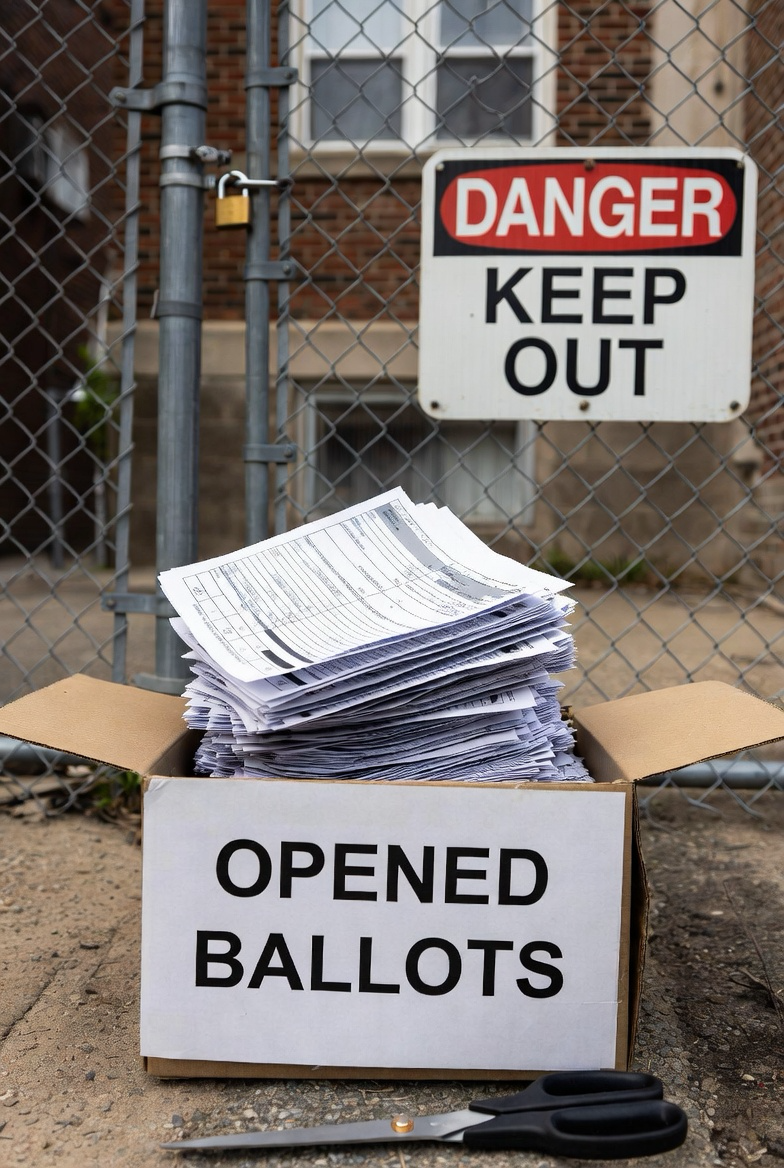
Three days after Hamtramck’s November 4 election, 37 absentee ballots turned up in the city clerk’s office. They had been opened — meaning the ballot contents were physically exposed — but never tabulated. That night, five unauthorized city employees, including the interim city manager and city assessor, entered the clerk’s office while those opened ballots were sitting there unsecured.
The city clerk, Rana Faraj, reported the situation to Wayne County officials. Then she said the words that should have ended the debate: She could no longer confirm the integrity of those ballots. She rescinded her earlier statement that only election officials had access to them.
The Wayne County Board of Canvassers became deadlocked on whether to count the ballots. The trial court agreed the Board was within its rights to decline. Then the case was appealed, and Michigan Court of Appeals reversed that ruling in a 2-1 decision on March 27.
The new mayor, Adam Alharbi, won by just 11 votes.
The Court Got It Wrong
“Unfortunately, what we see here is yet another example of a separate branch of government subverting the statutory and constitutional duties of the clerk and Board of Canvassers,” said state Representative Jay DeBoyer (R-63rd House District), Chair of the House Oversight Committee. The former clerk went on to say the court’s decision weakened election integrity, “the sole purpose of both the clerk and BOC.”
The majority opinion by Judges Borrello and Wallace leans heavily on a 1989 case, Gracey v. Grosse Pointe Farms Clerk, 182 Mich App 193. In that case, a judicial candidate’s wife illegally delivered other people’s absentee ballots to the clerk. The court ruled those ballots couldn’t be thrown out solely because of the improper delivery.
But the majority opinion glosses over a critical difference. In Gracey, the ballots were sealed and unopened. The chain of custody broke in the delivery, but no one had access to the ballot contents. In Hamtramck, the ballots were already open when unauthorized and unsupervised people walked in. The clerk herself swore she could not confirm they had not been touched.
That is not a procedural paperwork problem. That is a physical integrity breach.
The majority reframes the clerk’s sworn testimony as merely showing that “several individuals... entered the room.” That mischaracterizes what she actually said. She said she could no longer vouch for what happened to those ballots.
A significant difference exists between those two statements.
What Michigan Law Says About Opened Ballots
The court’s majority opinion never addressed Michigan election law, which already defines exactly what crimes could have been committed in that room.
MCL 168.932(b) makes it a felony for any unauthorized person to “fraudulently or forcibly add to or diminish the number of ballots legally deposited” or to “break open or violate the seals or locks of any ballot box.” MCL 168.932(e) goes further, making it a felony for any person not involved in ballot counting to open an absent voter ballot envelope, mark it, alter it in any way, or substitute another ballot.
The clerk didn’t testify that tampering occurred. She testified that she could not confirm that it had NOT occurred. MCL 168.932 tells us precisely what felony conduct was possible in that room during those overnight hours — and the majority never addressed it.
The Remedy Doesn’t Fix the Problem
The court didn’t order the ballots outright counted. Instead, it ordered them subjected to Michigan’s “challenged voter” procedures under MCL 168.745. This sounds like a safeguard. It isn’t — not for this situation.
Those challenge procedures ask one question: Was the voter eligible to vote? They do not — and cannot — determine whether a ballot’s contents were altered after the fact. There is no procedure in Michigan election law that can retroactively detect whether a felony under MCL 168.932 occurred against an already-opened ballot.
There is a second problem the majority never addressed. Under MCL 168.871(2), ballots are only eligible for recount if their security was preserved. The clerk testified under oath that these ballots’ security was not preserved. That means even if counted, these ballots would appear ineligible for recount if the results are later contested — a one-way door where compromised ballots can be counted once but never independently verified.
Rep. Rachelle Smit (R-43rd House District) put the statutory problem squarely.
“Michigan law under MCL 168.932 makes it a felony to open, mark, alter, or substitute an absent voter ballot. The clerk testified she could not confirm the integrity of these 37 already-opened ballots after unauthorized individuals entered her office overnight. The challenged voter procedures the court ordered cannot detect whether a felony occurred. The Legislature needs to close this gap before the next election.”
Sen. Ruth Johnson (R-Holly) framed the impossible position the ruling creates: “There is no good outcome in this case. Either 37 people don’t get their votes counted or ballots get counted that we can’t be sure really reflect the true votes of these 37 people because they were sitting there opened and unsecured. There’s not a lot of integrity in that.”
This Didn’t Happen in a Vacuum
Hamtramck is not a city where a simple administrative mistake derailed an otherwise clean election. This is a city where, in 2023, four sitting council members were investigated — and two criminally charged — for allegedly harvesting blank absentee ballots from newly naturalized citizens and filling them out themselves. Surveillance video appeared to show a council member handing bundles of ballots to a driver for drop-box deposit.
Clerk Faraj had formally reported these ongoing integrity concerns to Attorney General Dana Nessel in March 2025. For that, she claims she was eventually fired.
The majority’s opinion treats Hamtramck like any other city where a well-meaning clerk made an honest mistake. The full record tells a very different story.
The Camel’s Nose
As the saying goes, once you let the camel’s nose under the tent, the rest of the animal is sure to follow.
If this ruling stands, Michigan has now established that opened absentee ballots — stored unsecured, accessed by unauthorized persons, with the responsible official on record that she cannot confirm their integrity — can still be processed toward counting. All that is required is a constitutional argument broad enough to override the Board of Canvassers’ judgment.
Minnesota’s 2008 U.S. Senate race offers a cautionary tale. Al Franken defeated Norm Coleman by 312 votes after previously excluded absentee ballots were added to the count during litigation. Franken’s presence in the Senate provided the 60th vote needed to pass the Affordable Care Act. One disputed count. Enormous consequences.
The dissenting judge, Colleen O’Brien, got it right. The Board of Canvassers had discretion for good reason. Courts should be very careful before stripping that discretion away.
DeBoyer summarized the situation: “If Boards of Canvassers can no longer exercise judgment when a clerk says she cannot vouch for ballot integrity, what exactly is the Board’s role and why have we seen example after example of some people wanting to weaken or destroy the authority of local clerks and county Boards of Canvassers?”
This case is headed to the Michigan Supreme Court. It deserves serious scrutiny when it gets there.


Khi đọc các bài giới thiệu nền tảng giải trí, tôi thường thích những bài viết ngắn gọn để có thể xem nhanh trên điện thoại. Bài viết này có bố cục khá dễ theo dõi khi phần nhắc đến top 10 nhà cái uy tín nhất hiện nay được đặt ở giữa nội dung. Điều đó giúp mạch bài trở nên tự nhiên hơn và không tạo cảm giác quảng cáo quá sớm. Nội dung tập trung vào trải nghiệm chung của người dùng với giao diện dễ sử dụng và nhiều danh mục quen thuộc như slot, game bài hay mini game. Nhìn chung cách diễn đạt khá nhẹ nhàng và dễ hiểu.
Có lần đang đi du lịch nước ngoài thì bỗng nghe thấy có một nhóm người trên máy bay bàn tán về Nhà cái UU88 nghe những lời họ nói thì có vẻ như trang web này được khá nhiều người biết đến. Mình vốn không để ý mấy chuyện này nên chỉ nghe ké vài câu rồi nhớ tên. Sau đó vì tò mò mình mới thử tìm xem, ấn tượng đầu tiên là giao diện khá thân thiện, các mục được chia rõ và cách trình bày nhìn tương đối thoáng.
Mình bắt gặp website H19 khi đang tìm tài liệu liên quan đến một nội dung mình quan tâm nên đã mở vào đọc thử. Mình chỉ lướt qua để tham khảo cách họ trình bày và phân chia các chuyên mục. Cảm nhận đầu tiên là bố cục khá sạch, từng nhóm nội dung được tách ra rõ ràng nên không tạo cảm giác quá tải. Tổng thể, website có cách trình bày gọn và khá dễ theo dõi. Các tiêu đề có kích thước phù hợp, giúp người xem dễ theo dõi vị trí khi kéo xuống
Khi đọc các bài giới thiệu nền tảng giải trí, tôi thường thích những bài viết ngắn gọn để có thể xem nhanh trên điện thoại. Bài viết này có bố cục khá dễ theo dõi khi phần nhắc đến LUCK8 được đặt ở giữa nội dung. Điều đó giúp mạch bài trở nên tự nhiên hơn và không tạo cảm giác quảng cáo quá sớm. Nội dung tập trung vào trải nghiệm chung của người dùng với giao diện dễ sử dụng và nhiều danh mục quen thuộc như slot, game bài hay mini game. Nhìn chung cách diễn đạt khá nhẹ nhàng và dễ hiểu.
TN88 mình cũng kiểu nghe người ta nhắc nên bấm vào xem thử cho biết thôi. Không có ngồi đọc hết nội dung đâu, chủ yếu lướt giao diện với cách họ chia phần. Thấy trang làm khá dễ theo dõi, mấy tiêu đề đặt thẳng thắn nên nhìn cái là đoán được chủ đề đang nói gì. Có đoạn giới thiệu về AI viết ngắn gọn, nói họ kết hợp sáng tạo với chức năng trong kiến trúc nên mình đọc lướt vẫn nắm ý. Mình thích kiểu cuộn xuống là từng khối nội dung tách riêng, không bị nhồi chữ, nhìn đỡ mệt mắt. Mình thấy khá hữu ích