


Michigan Democrats Discover Election Integrity Problems in Their Own Backyard
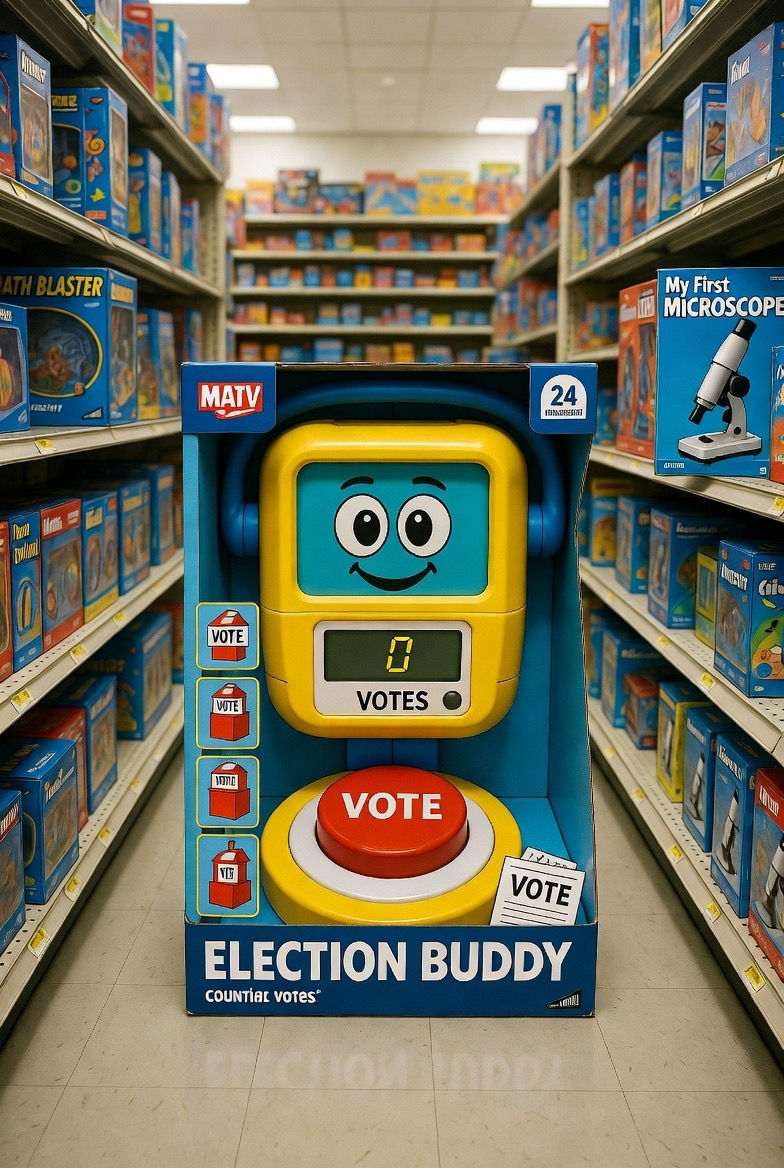
The party used an app called "Election Buddy." It performed at a level its name suggests.

By Kristine Christlieb, MFEI News & Commentary Editor
May 8, 2026
The Michigan Democrat Party's April 19 state endorsement convention was barely two weeks old when calls for an audit started.
State Sen. Sylvia Santana, D-Detroit, finished third in the race for one of two Michigan State University Board of Trustees nominations — losing to incumbent Kelly Tebay Zemke by approximately 15 votes, according to unofficial results reported by the Detroit News. Santana filed a 53-page appeal alleging "material errors" in the vote-counting process and requesting an independent audit of all convention races.
Her campaign reviewed location data from devices used to cast votes and found more than 200 ballots had been submitted from outside Detroit's Huntington Place convention center, the required venue for voting under the party's own rules. Some delegates, it appears, had voted from home. One acknowledged as much publicly. Another apparently cast votes from as far away as Montenegro.
According to the Santana camp, if the 200 votes from outside the convention center aren't counted, she wins the nomination.
The convention used an app called Election Buddy, a name that suggests it belongs in the toy aisle between Math Blaster and My First Microscope, which allowed delegates to vote from personal cellphones. The party required members to be physically present to vote. The app, apparently, did not get the memo.
Santana's filing, again, according to reports, also alleged 302 people who cast votes did not appear on the party's official delegate list, that 208 voters shared a phone number with at least one other voter — including six people linked to a single number. Plus, in 16 documented cases, votes were recorded incorrectly. One longtime Detroit party member signed an affidavit, under penalty of perjury, stating she received six different voting access codes.
The appeal itself has not been made publicly available. The Michigan Democrat Party declined to provide a copy to reporters, citing the pending appeals process. While multiple news outlets have reported extensively on the filing's contents, apparently from copies Santana's campaign provided directly. But none has published the document itself. For a 53-page filing whose central argument is the need for transparency in the voting process, the irony of its own secrecy is hard to miss.
MFEI News & Commentary requested a copy of the filing from Santana's attorney Melvin Hollowell. He has not responded as of this publication date.
Attorney General Dana Nessel and Oakland County Prosecutor Karen McDonald, both Democrats, have joined Santana's call for an independent audit. McDonald put it plainly:
"Votes were incorrectly recorded, people voted who were not onsite, and some votes were not recorded at all."
These concerns — absentee and remote voting, vote-counting accuracy, chain of custody, the integrity of the count itself — are precisely what Michigan Democrats have spent years dismissing as the province of conspiracy theorists and sore losers.
When Republicans raised questions about absentee ballots and remote voting procedures after 2020, Democrat officials scoffed. Attorney General Nessel warned in a tweet of a "false equivalence," essentially saying the convention audit concerns are real in this situation but shouldn't be applied in other situations.
"Those drawing a false equivalence are also the same ones telling you not to trust Michigan's election system," she posted Monday. "Those who traffic in election conspiracies will seek any and every opportunity to undermine public confidence in our elections."
In other words: the concerns are legitimate here, but not there.
Patrice Johnson, founder and chair of the Michigan Fair Elections Institute, spoke to the contradiction.
"What we're watching is Democrat leaders apply one standard to their own convention and a completely different standard to everyone else," Johnson said. "The same questions they're asking right now — were the voters who they said they were? Were the votes cast from where the rules required? Was the count accurate and transparent? — are the exact questions election integrity advocates have been raising about Michigan's state-run elections for years. We're glad they're asking them. Better late than never."
MFEI is no stranger to Michigan's convention chaos. When the Michigan Republican Party's state committee recently deadlocked over how to conduct its own convention audit process, party Chairman Jim Runestad asked MFEI to assist as a neutral third party. The process the organization put forward held, and the GOP's March 28 endorsement convention in Novi proceeded without incident.
Chairman Jim Runestad called it a result of the party "listening to delegates ahead of convention to resolve any issues and to avoid disunity on the floor."
The Michigan Democrat Party, for its part, has confirmed that an appeals process will be conducted. A party spokesperson declined to say whether the findings would be made public.
Meanwhile, the questions pile up. If 200-plus votes cast outside the convention center could swing a race decided by 15 votes, which other races were affected? The nominations for attorney general and secretary of state — offices that will oversee Michigan's actual elections — were decided at the same convention, by the same application, under the same rules that apparently weren't enforced.
Lt. Gov. Garlin Gilchrist won the secretary of state nomination with about 58 percent of the convention vote. Washtenaw County Prosecutor Eli Savit won the attorney general nod with about 59 percent. Neither has called for an audit.
Johnson framed the larger lesson simply:
"Accuracy and transparency in vote counting are not partisan values. They're either principles you hold or they're not. What happened at the Democrat convention is Exhibit A for why they matter — and why you can't selectively apply them based on who's winning."


😂😂😂 how do you like it. Shut up and take it. We have for years.