


WHY VOTE? Seth Keshel's Veteran Perspective


By Seth Keshel, Special Advisor to Michigan Fair Elections Institute
May 26, 2026
I am not only a proud Army veteran who served in Afghanistan during the 2010-11 troop surge, but the son of a three-time Vietnam veteran, brother of two Army officers, and uncle to another. Our family has an unbroken streak of nearly 63 years with an Army officer in uniform on active duty still standing. I hung the uniform up twelve years ago, but my service continues in the form of educating all Americans on the importance of the electoral system, threats to its integrity, and the dangers of leaving participation in the system to those who don’t share the same values America’s veterans have.
In uniform, we were always discouraged from being overly political. Too many took that admonition to mean “have nothing at all to do with civic engagement.” I’ve known many retired military veterans who told me they never cast a single ballot in more than two decades of military service, often blaming their inaction on constant relocation, indifference to local issues, or confusion over how to get plugged in. Sadly, the communities hosting these military members lost out on key voices that could have made them much stronger.
Military personnel possess unique leadership skills forged under pressure, often in the worst of circumstances, that can lend valuable perspective to the issues local communities face. Those trained in logistics and personnel management can quickly spot a misallocation of resources, while those battle-hardened leaders used to sending people into harm’s way are adept at identifying key “do or die” priorities and examining the long-term impact of a particular agenda or set of policies a city or county is looking to institute. In some cases, military veterans make excellent elected officials anywhere from the school board to executive levels of government.
General Dwight D. Eisenhower, fresh off leading the Allies to victory in World War II, became president within eight years of the war ending and led the country into its status as the world’s premier superpower, which she still enjoys today. He made leadership simple and pragmatic, as shown by his “time matrix,” which is one of my favorite tools:
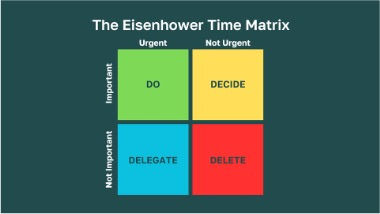
That tool is a useful guide for time and resource allocation, especially when priorities are mixed; and decades later, leaders rely on it as a fundamentally sound way of managing our most valuable resource – time.
Active-Duty Military Not Voting? – Is It Indifference, or Something Else?
Veterans have strong rates of turnout in American elections, but active-duty members do not. In fact, there is only a 45% participation rate among active military members, and they also lag in terms of voter registration.
Service members today must invest time in understanding where the country they’ve been serving is headed if their willingness to participate in the political process continues to lag behind that of other groups. I consider it an essential task for military members to serve their communities by understanding local issues, participating in as many functions as possible both in and out of uniform, and volunteering with groups to impart critical lessons learned and work habits.
Sitting things out and leaving them solely to civilians is the wrong answer. Military members, by serving in defense of our liberties, guarantee the right of civilians to participate in the process of self-government that people come from all corners of the world to be part of; however, they also guarantee their own rights to partake in a process that desperately needs their voices to be heard. Leaders, regardless of partisanship or ideology, should encourage and assist military members stationed within their communities to register to vote, attend candidate forums, and vote in every election cycle.
There is no shortage of veteran groups eager to assist in putting our service members in position to impact the locations across our country blessed to host them for a few years. For veterans and military members reading this, I urge you – please do not forsake the critical task of making your voices heard and educating others so our country can be a freer place when we leave it behind to those who will take our places.
Seth Keshel is a former Army Captain of Military Intelligence. Known for his highly analytical method for forecasting elections, he predicted all 50 states accurately in 2016 and continues to be at the forefront of the election integrity movement nationally, he has written a new book — The American War on Election Corruption: The Crusade to Restore Trust in Voting, Keshel resides in Arizona.



Perhaps it's time to create a special district, or more, in which all members of the military will hypothetically reside. For what reason would citizens choose to make a true patriots right to vote more difficult than for ordinary citizens?